
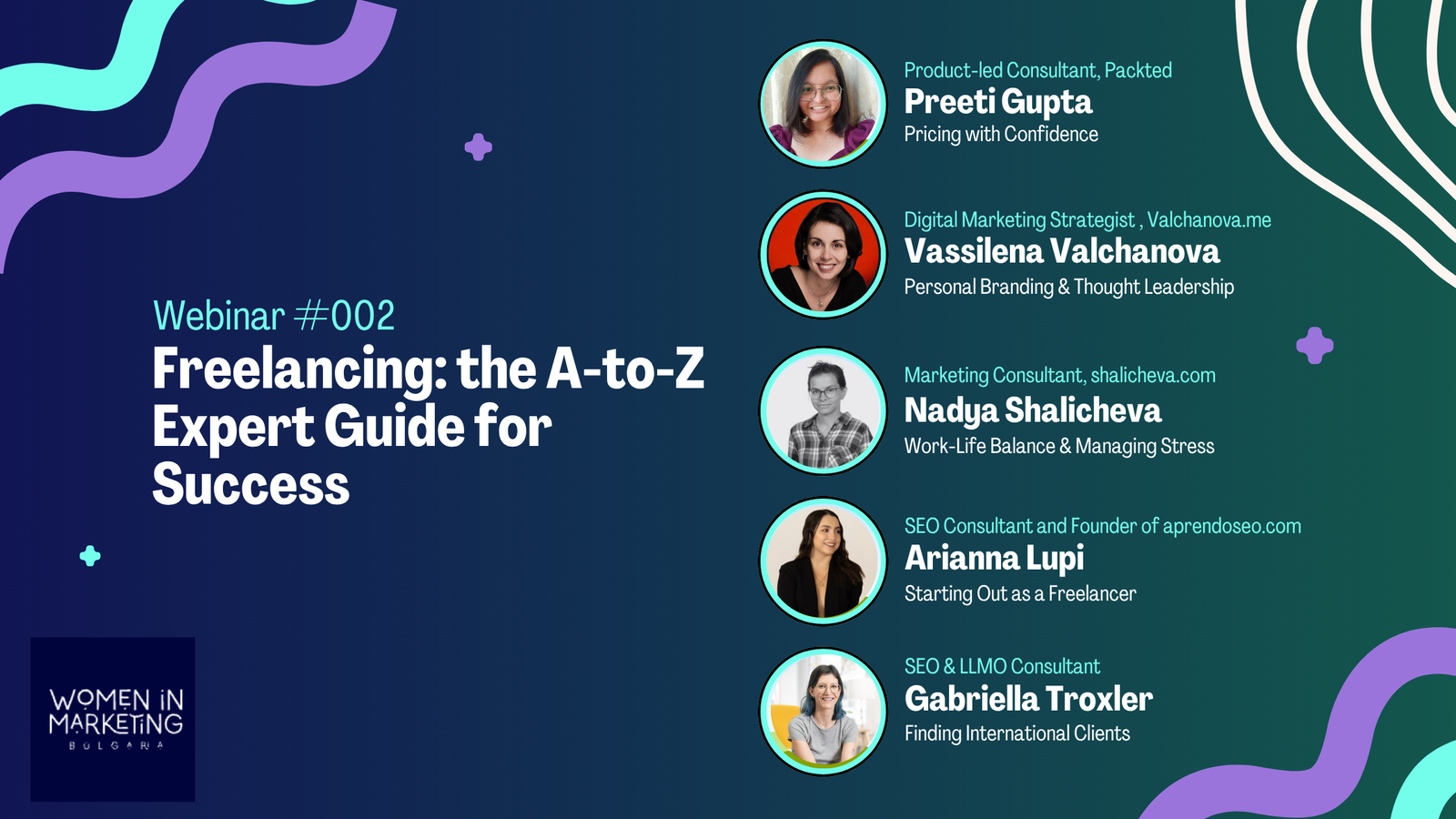
Експертни анализи за всички етапи — от създаването, през ценообразуването и привличането на клиенти, до изграждането на бранд и защитата на вашето благополучие
Споделянето на работата ви като фрийлансър е повече от “да бъдете свой собствен шеф”. Това е начин да увеличите въздействието на вашия опит, да изградите авторитет и да развиете устойчив поток от работа. И все пак, преминаването от “Добър съм в това, което правя” към устойчив, добре платен бизнес на свободна практика може да се почувства обезсърчително – особено ако искате да се конкурирате в международен план, както вероятно правят повечето от нас, живеещи в България.
В уебинар #002 от Жените в маркетинга – България на Фрийланс, опитен панел от фрийлансъри в маркетинга, обясни как точно да започнете и развиете успешна кариера на свободна практика в маркетинга. Тази публикация обобщава основните уроци – практични, изпитани на практика съвети, които можете да приложите на практика веднага.
Запознайте се с панела
В това резюме ще се позоваваме на прозренията, които тези петима опитни маркетингови фрийлансъри споделиха в уебинара и панелната дискусия, организирани от нашия основател. Лазарина Стоянова:
Василена (Васи) Вълчанова
Стратег по дигитален маркетинг, Valchanova.me
Вижте страницата на лектора →Кликнете, за да преминете към някой от разделите в тази публикация и да прескочите напред
Как да започнете като фрийлансъри — Време и подготовка (Ариана Лупи)
Как да намерите международни клиенти (Габриела Трокслер)
Ценообразуване с увереност (Прити Гупта)
Личен брандинг и лидерство на мисълта (Василена Вълчанова)
Баланс между работа и личен живот и управление на стреса (Надя Шаличева)
Акценти от панела: Плащания, договори, капани и кога (не) е добре да се изгражда агенция
Как да започнете като фрийлансър — време и подготовка
▶ Гледайте този сегмент (5:00)
За Ариана Лупи, готовността не е чувство; тя е доказателство. Нейният лакмусов тест започва с няколко осезаеми победи – проекти, в които тя е преместила бизнес “от точка А до точка Б” с видими резултати. Фрийлансърите изискват и основно, притежавано умение, което можете да предоставите от край до край (например SEO одити или създаване на съдържание), както и зрялост за управление на очакванията на множество заинтересовани страни. Както тя го казва, фрийлансърите заместват един шеф с “множество шефове и множество очаквания”.”
Позиционирането прави всичко останало по-лесно. Ариана е категорична: най-силният ранен ход е една услуга в една ниша. “Правете го многократно, станете известни в това пространство и препоръките ще последват.” За да подкрепи този фокус, тя препоръчва прост, но надежден отпечатък: сайт или портфолио от една страница с показатели „преди/след“ и кратка форма, която насочва към обаждане за откриване.
В рамките на доставката, Ариана набляга на хигиената: дефинирайте обхвата в договора, договорете се къде се осъществява комуникацията (имейл, Slack), задайте ритъм (седмичен или месечен), заключете ключови показатели за ефективност (KPI) и етапи и докладвайте за напредъка. Този ритъм ви защитава и уверява клиентите, че работата се движи към резултати, а не само към задачи.
Сигнали за готовност
- Доказани победи: ~5 осезаеми проекта, при които сте развили бизнеса си от точка А до точка Б (трафик, приходи, последователи, продажби - измерими резултати).
- Основна “притежаема” задача: Една услуга, която можете да изпълнявате от край до край (напр. SEO одити, създаване на съдържание, платени кампании).
- Управление на очакванията: Можете да определите обхвата на работата, да зададете граници и да поддържате съответствие между заинтересованите страни – защото работата на свободна практика = множество шефове.
- Известна мрежа: Хората вече ви свързват с вашите умения; готови сте да развиете видима лична марка.
Преди да скочите:
- Портфолио с числа. Покажете “преди/след”, резултати и кратки препоръки.
- Базово ценообразуване. Честно си преценявайте времето. Дори и да започнете да учите усилия на всеки час, пакет в резултатите възможно най-скоро.
- Фокусирайте се върху позиционирането си. Най-силният маршрут: една услуга × една ниша (напр. съдържание за B2B SaaS).
- Просто улавяне на потенциални клиенти. Лек сайт, портфолио и формуляр за прием (например за резервация на обаждане).
- Хигиена при доставка. Договор → комуникационни канали (имейл/Slack) → ритъм (седмично/двуседмично) → KPI/елементи → отчетност/обратна връзка.
Вашите следващи действия
- Кодифициране на достоверността: Превърнете петте си най-добри победи в казуси от един слайд с показатели за резултатите и история от 2-3 изречения.
- Изберете вашия фокус: Ангажирайте се с една водеща услуга × една ниша за 90 дни; актуализирайте заглавието и портфолиото си, за да съответстват.
- Направете адаптацията без усилие: Подгответе стандартен обхват на работата, контролен списък за достъп и начален дневен ред, които използвате повторно за всеки проект.
- Публикуване на прием: изпратете лек сайт с вграден формуляр, който запазва обаждане (и задава 3-те най-показателни въпроса за определяне на обхвата).
Как да намерите международни клиенти
▶ Гледайте този сегмент (11:00)
Габриела Трокслер не си е поставила за цел да работи глобално – международните клиенти са дошли, след като е станала по-конкретна. Повратният момент е яснотата относно СЗО тя служи (индустрия, роля, език), където те прекарват време и какво тя решава най-добре тесен проблем. “Ако се рекламирам като ‘SEO консултант’, се конкурирам с всички. Колкото повече нишови позиции заемах, толкова повече международни клиенти се появяваха.”
Нейният предпочитан канал е умишлено минималистичен: Само в LinkedIn. Няма уебсайт. Само две публикации седмично, които показват нейния процес и малки, реални успехи на клиентите. Тези публикации правят две неща добре: те демонстрират как тя мисли и създават лесни моменти от типа “Искам точно този резултат” за потенциалните клиенти. Тя съчетава тази видимост с присъствие в нишови общности – отговаряйки на въпроси и като е полезна – което тихомълком води до препоръки.
Позициониране с точност:
- Дефинирайте вашето идеален клиентрегион/език, индустрия, старшинство и проблем.
- Ниша надолу за да се избегне конкуренцията на генеричните продукти — специфичните продукти надминават широката гама в международен план.
- Изберете едно основна платформа и се появяват постоянно. Габриела тича изцяло в LinkedIn (без уебсайт) с 2 публикации/седмица.
По отношение на конверсията, нищо не може да се сравни с близостта. Конферентните лекции, уебинарите и разговорите след сесиите са донесли на Габриела устойчив входящ интерес. “Когато хората ви видят отблизо, е по-лесно да ви се доверят”, сподели тя. Пазарни платформи като Upwork или Fiverr могат да бъдат добро начало, но тя предупреждава за динамиката на ценова война, ако вашите целеви купувачи ценят дълбочината пред скоростта.
Какво всъщност работи:
- Общностите на първо място. Отговаряйте на въпроси, споделяйте истории, бъдете полезни; последват препоръки.
- Публично доказателство. Следвайте работни процеси, бележки за разглобяване и моментни снимки на успеха – “Искам точно този резултат” е мощен входящ спусък.
- Сцени и екрани. Конференциите (или уебинарите/подкастите/статиите) ви показват “отблизо” и изграждат доверие отвъд границите.
- Пазар, подходящ за пазари. Upwork/Fiverr може да бъде полезен, но избягвайте ценови войни от типа „надпревара за най-ниските цени“, ако това не е вашият модел.
Лазарина присъединих се към дискусията, за да препоръчам публикуване “безгранични” активи—инструменти или шаблони, които всеки може да използва, независимо от пазара — за да се избегне пристрастието около местоположението и да се поддържа дискусията съсредоточена върху стойността, както и да се откроите като фрийлансър на наситен пазар и да се превърнете в международен магнит за клиенти.
Вашите следващи действия
- Напишете вашия ICP в три реда: роля + индустрия, география/език и конкретния резултат, който искат от вас.
- Инсталирайте каданс: Изберете една платформа и се ангажирайте с 2 публикации седмично в продължение на 8 седмици – споделяйте мини-разглобявания, скрийншотове от процеса и откъси от „преди/след“.
- Близост на резервацията: Кандидатствайте за една конференция/уебинар във вашата ниша; когато говорите, включете една практическа рамка, която потенциалните клиенти могат да повдигнат утре.
- Изпратете универсален ресурс: създайте контролен списък или шаблон, който вашият ICP ще споделя вътрешно; включете ясна призивна фраза за “запазете час за консултация”.
Ценообразуване с увереност
▶ Гледайте този сегмент (18:30)
Прити Гупта е директно: “Почасовото ценообразуване е капан.”Това ограничава доходите, фокусира разговора върху времето, а не върху стойността, и наказва ефективността. Тя не го отхвърля за абсолютните начинаещи, но призовава фрийлансърите бързо да преминат към…“ проект или базиран на стойност ценообразуване.
Нейният практичен мост от почасово към проектно хонорар е прост: поддържайте вътрешен почасова ставка за оценка, сумиране всички часове (включително откриване, управление на проекти, отчитане и ревизии), умножете ги и след това добавете буфер за риск/печалба. Представете офертата като резултати и доставки, а не като време. Оттам отворете разговор за ценности“Колко важно е това? Какво ще стане, ако не се направи? Какъв е плюсът, ако проработи?” Цена клиент, а не общата работа – защото възприеманата стойност се променя в зависимост от контекста.
Как да определите такса за проект като фрийлансъри:
- Запазете вътрешен почасов бенчмарк.
- Оценете всички часове (включително откриване, корекции, преходно управление, отчитане).
- Умножете, след това добавете буфер за риск/печалба.
- Представете като резултати и доставки, а не като време.
При обаждането смелостта е важна. “Кажете цената си и след това направете пауза.” Не правете отстъпка; намалете обхвата или добавете бонус. Следете процента си на сключване на сделки: ако ~80% кажат “да“ без съпротива, значи сте подценени. Повишавайте редовно цената. И никога не приемайте аргумента, че географското ви местоположение трябва да намали таксите ви—“цена за стойност, а не вашият пощенски код.”
- Попитайте: Колко важно е това? Каква е ползата, ако проработи? Каква е цената на бездействието?
- Цена на клиент, а не задачата – възприеманата стойност варира в зависимост от контекста.
Начин на мислене и механика:
- Не отстъпвайте –коригиране на обхвата или вместо това добавете бонус.
- Кажи си цената тогава пауза.
- Ако ~80% купува без съпротива, цената ви е подценена—вдигни го.
- Увеличавайте цените редовно; никога не намалявайте цените поради географско местоположение.
Вашите следващи действия
- Откриване на надстройки: Добавете 6–8 въпроса, които подчертават важността, въздействието и цената на бездействието; обобщете на първата страница на предложението си.
- Публикуване на пакети: Превърнете трите си най-добри услуги в три нива с фиксиран обхват (“добри/по-добри/най-добри”), всяко от които е свързано с ясен резултат. Премахнете “почасово” от предложенията.
- Инсталирайте преглед на цените: След всеки 3–5 подписани проекта, оценявайте процента на успех, разширяването на обхвата и маржовете; коригирайте таксите и буферите съответно. Задайте напомняне в календара, за да преглеждате процентите на всеки 3–6 проекта.
- Упражнявайте паузата: Напишете сценарий за ценовата си линия и я репетирайте – на глас – докато тишината ви се стори нормална.
Личен брандинг и лидерство на мисълта
▶ Гледайте този сегмент (25:30)
За Василена (Васи) Вълчанова, личният брандинг е видимият ръб на нещо по-дълбоко: лидерство на мисълта. Тя го разделя на четири измерения, които се натрупват с течение на времето -достоверност, видимост, последователност и съдържание.
В началото, доверието заимства авторитет от изследванията на други и признати рамки. С течение на времето то се измества към демонстриране на собствена нюансирана експертиза, докато името ви не се превърне в отправна точка. Видимостта се променя от малък кръг към това, което тя нарича ’знаменитост по темата”—признание не само за дадена тема, но и за отличителна гледна точка в рамките на нея. Последователността е в избора на ритъм, който можете да поддържате; Василена предпочита канали, насочени първо към текст (LinkedIn и бюлетин), защото там върши най-добрата си работа. А съдържанието е скокът от съвети към генеративно прозрение—идеи, които променят начина, по който вашата аудитория подхожда към даден проблем.
Нейният метод е освежаващо линеен: първо стратегия (кого се опитвате да привлечете и защо), след това глас (вашите “забележителни ъгли”), след това план за канали, който съответства на вашите силни страни, и едва след това преки пътища за производство (насоки, контролни списъци, селективен изкуствен интелект). Инструментите усилват системата; те не я заместват.
Четирите измерения (Василена Вълчанова):
- Достоверност — от заемане на авторитет → демонстриране на експертен опит → превръщане в цитиран авторитет.
- Видимост — от ограничен обхват → признат от връстници → знаменитост по темата с ясно изразена гледна точка.
- Последователност — реалистична, повтаряема каданс на няколко избрани канала.
- Вещество — не просто съвети; прозрения, които промени как вашата аудитория подхожда към произведението.
Път от четири стъпки:
- Стратегия: Кого привличате? Какво искате да направят?
- Глас и гледна точка: Назовете вашето забележителни ъгли— дубълите, които само ти можеш да притежаваш.
- План за съдържание: Изберете формати/канали, които всъщност наслаждавайте се (напр. LinkedIn + бюлетин).
- Производствени преки пътища: Едва след стратегията – използвайте насоки, контролни списъци и (селективно) изкуствен интелект за мащабиране.
Вашите следващи действия
- Резултат от себе си спрямо четирите измерения; изберете едно, което да подобрите през това тримесечие, и дефинирайте как изглежда “подобрено”.
- Напишете едностранично гледно място: Избройте 3–5 позиции, които ще защитавате публично и които показват как мислите (не само какво знаете).
- Изберете два канала + каданс: Ангажирайте се за 12 седмици; измервайте резултатите, които контролирате (публикации, имейли) и сигналите, които имат значение (отговори, покани).
- Създайте комплект съдържание: Формули за заглавия, контури на публикации и примерен файл с плъзгане, за да намалите времето за създаване наполовина. Създайте контур/шаблон за многократна употреба, за да ускорите създаването.
Баланс между работа и личен живот и управление на стреса
▶ Гледайте този сегмент (35:30)
Системен подход (Надя Шаличева):
- Цялостно настаняване: Използвайте “Колелото на живота” – оценете всяка област, след което направете Н-1 размисъл (“Защо 5, а не 4?”) за позитивно преосмисляне.
- Един фокус на тримесечие: Умишлен дисбаланс > преследване на перфектен баланс навсякъде.
- Входове и резултати: Свържете целите за резултати (напр. приходи, клиенти) с входни цели (напр. 2 публикации в LinkedIn/седмица). Анализирайте в края на тримесечието: дали резултатите са изостанали, защото вложените ресурси са се влошили, или защото стратегията трябва да се промени?
- Планирайте радостта целенасочено: “Бинго за забавление и щастие” от 25 квадрата (движение, връзки, приключения, учене, малки предизвикателства) ви кара да казвате „да“, когато се появят възможности.
- Доверете се на процеса: Почивката подхранва креативността; анализът > самокритика.
Вашите следващи действия
- Изпълнете одита: вкарайте своя резултат в „Колелото на живота“, направете N-1 изпита и изберете една фокусна област за следващите 12 седмици.
- Цели по двойки: изберете два резултата и дефинирайте трите седмични входа, които най-пряко ги водят; преглеждайте всеки петък.
- Радост от графика: Изградете вашето бинго от 25 квадрата и календар с поне три кутии този месец (без отлагания).
- Резервирайте ретроспектива: Проведете 60-минутен преглед в края на тримесечието, за да коригирате стратегията – първо данните, а след това вътрешният диалог.
Акценти на панела: плащания, договори, капани и кога (не) е добре да се изгражда агенция
▶ Гледайте този сегмент (44:00)
Плащания и условия
Хигиената на плащанията се появяваше многократно. Ариана посъветва да се определят условия, които защитават паричния поток от първия ден—50% предварително и 50% при доставка, или пълно плащане преди работа за по-малки обхвати. Корпоративните клиенти често изискват по-дълги цикли на плащане и настройка на доставчици; планирайте закъснението, вместо да се опитвате да изплатите фактури по-късно. Когато бюджетите са ограничени, коригирайте обхвата; не свивайте стойността си. Моделите за споделяне на печалбата могат да работят, когато влияете директно върху приходите – структурирайте внимателно.
Относно тарифите, Габриела предложи полезна проверка на реалността от скъпата Швейцария: “Цените никога не са проблем.”Когато стойността е ясна и резултатите са достоверни, местоположението се превръща в бележка под линия.“.
Лазарина насърчава фрийлансърите да се формализират партньорства за препоръки (бранд ↔ съдържание ↔ SEO и др.). Едно просто споразумение за обхвата, предаването на задачи и таксите за препоръки може да създаде постоянен поток от подходяща работа, без да се наемат нови служители.
Често срещани клопки, които трябва да се избягват
- Неясно условия на плащане и обхват.
- Пропускане отчитане/KPI (клиентите не могат да видят напредък).
- Твърде широката гама – липсата на позициониране забавя препоръките и ценообразуването.
Договори
Групата беше единодушна относно договорите: винаги имайте такъв, дори ако клиентът използва своите; самото наличие на ясни условия намалява напрежението и сигнализира за професионализъм.
Съвет: Подгответе договор (дори когато клиентите използват свой собствен). Наличието на ясни условия сигнализира за професионализъм и предотвратява недоразумения.
Агенция срещу самостоятелност
Кога да изградите агенция? Тестът на Ариана е практичен: имате повтаряема услуга с постоянни резултати, СОП които ви позволяват да делегирате без микромениджмънт и ценообразуване, което поддържа променливи (за всеки проект) разходи преди фиксираните заплати.
Помислете за създаване на агенция, когато имате:
- А повтаряема услуга с постоянни резултати.
- Изчисти СОП така че можете да делегирате без микромениджмънт.
- Ценообразуване, което е в подкрепа на изпълнителите променливи (за всеки проект) разходи преди фиксираните заплати.
Също толкова валидно, Василена отбелязано, е изборът да останеш солист с високо въздействие, ако вършенето на работата, а не управлението на хора, е това, което те зарежда с енергия.
Лазарина също така подчерта важността на това да останете сами или да си сътрудничите (вместо да изграждате агенция), ако не сте силен лидер или сте фундаментално против традиционния модел на агенция. Вместо това, включете се
Следващият ти ход
Изберете един раздел по-горе и го имплементирайте следващи стъпки, които могат да бъдат предприети тази седмица. Малки, последователни стъпки – тясно позициониране, ценообразуване, основано на стойността, видимо доказателство за работа и проста система за благополучие – се сливат в бизнес на свободна практика, който е печеливш, спокоен и търсен.
 Български
  English (UK)