
About the Speakers

Meet the Speaker
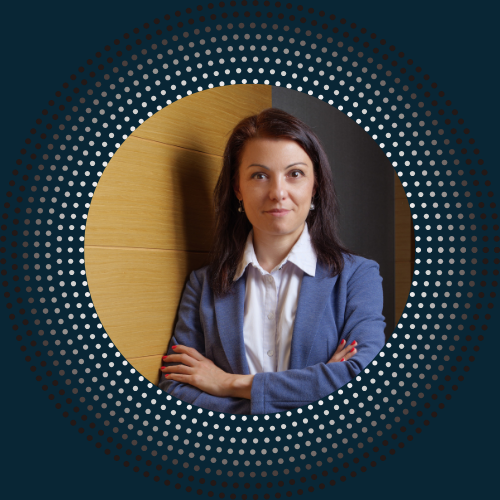
Delyana Samolova
CEO & Co-founder at SocialMama | Founding Member of Mamapreneur. A marketer and entrepreneur with a solid economic background from Germany and nearly a decade of experience as a Social Listening Expert. Having spent years analysing digital conversations and consumer behaviour, she transitioned her expertise into a powerful mission: transforming the motherhood experience through connection. Delyana is the founder of Mamapreneur, a thriving community for mothers in business, and the creator of SocialMama — a mobile application designed to eliminate social isolation and help mothers build authentic friendships and supportive networks. Ahead of its highly anticipated launch, SocialMama already boasts a waitlist of nearly 300 mothers eager to connect. A proud mother of a three-year-old girl herself, Delyana is deeply passionate about the strategic power of community as a driver of trust, peer support, and real-world impact.
Meet the Speaker
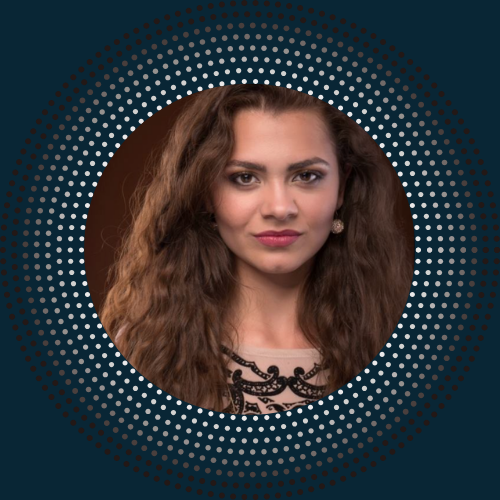
Ekaterina Ancheva
Head of Identity and Communications at UniCredit Bulbank. She has over 15 years of experience in internal communications, integrated communications, corporate reputation management, strategic planning, digital channels, and event management. Ekaterina is a member of the communications group of the Council of Women in Business in Bulgaria, where she also served as Chairperson from 2019 to 2022, and a member of the Bulgarian Public Relations Society (BDVO) since 2019.
Meet the Speaker
Stefy Krushkelova
Founder of NOVARA Consulting, bringing 14+ years across marketing, sales, partnerships, and communications, with a 6+ year focus on building online brand communities that drive retention and long-term revenue for e-commerce brands across the US, UK, and Australia. Currently pursuing an MSc in Cognitive Science, grounding her work in how people process information and make decisions.
Panel Discussion Transcript
[00:00:00]
Lazarina (host): In this panel we are going to be talking about the fact that communities have quietly become one of the most powerful and most underestimated drivers of trust, influence, and real business results.
We’re going to actually sit down with the people that are building these communities, both on the non-corporate side and the corporate side and people that are investing in these communities as well. What I’m going to do is do a very small amount of their profiles, because I want to give them the opportunity to express what they do in their own words.
And I’m going to, of course, share the fun facts with you. Deyana Simova is the CEO and co-founder of Social Mama. She’s also a founding member of Mamapreneur. And she has worked before for nearly a decade as a social listening expert, and she has spent years analyzing conversations and consumer behavior.
And then she turned her passion into [00:01:00] several successful communities and businesses focused on motherhood and making that experience a little bit better. Her fun fact is that her husband and her said that they are never coming back to Sofia. Guess where they live now? Then we have, Ekaterina Ancheva.
She is the head of identity and communications at UniCredit Bulbank. She has over fifteen years of experience in internal communications, integrated communications, corporate reputation management, strategic planning, digital channels, and event management. When I read this and I was like, “And event management?”
Okay.
I’ve been reading the bios and everything, and I’m thinking like everyone has like more than 15 years of experience.
So what a room to be in, honestly. And I’m very happy that our community has grown to the extent of not just being about SEO, not just being about social media, not just being about content or events or [00:02:00] whatever. And it’s just like a very kind of multidisciplinary space, so I’m very proud of that. Еkaterina is both a member of the groups that I mentioned beforehand when I was talking about the media partners the Council of Women in Business in Bulgaria and the PR Association.
And her fun fact is that she has an absolute talent to find four-leaf clovers. Oh, yeah. And I know the question that you’re asking is, are you then super lucky in your life? And she says she is, which is amazing. I love that for you. That’s awesome. Can’t relate though. Definitely can’t relate. And finally, we have Stefi Krushkelova.
She is the founder of Novara Consulting. She brings, again, over a decade of experience, 14 years and more across marketing, sales, partnerships, and communications with a large focus over six years on building online communities that drive retention and long-term revenue for e-commerce brands across three continents, which is amazing for you.[00:03:00]
And because it doesn’t sound like you’re busy enough, you’re also pursuing an MSC in cognitive science as well, so that’s great. That’s great that you girls have this time. That’s fantastic. And her fun fact Is that she visited the US on a work travel visa and while she was there, she managed to visit more than twenty-five states. So that’s something to talk about. Congrats. Okay, with that said, I’m going to pass the mic to you and going around the room.
I’m gonna grab a little seat. So how the panels are going to work this year is that we are we have prepared questions because I want to be con-conscious of time, at least as much as we can. And we’re going to do as many of them as we can, but then we’re going to switch to the other panel, and you can continue during the networking break to chat on these topics.
And first, I would love to learn a little bit more about what you do in your day-to-day, your role and what are the communities you are part [00:04:00] of and representing, or most importantly, what are you aiming to do in those communities? What is the impact that you’re trying to achieve?
Stefy Krushkelova: Thank you for the introduction. So my name is Stefi Krushkelova, and I’m building online brand communities which is kind of different from all the other communities that are very popular, in the society. The brands I’m mostly working with are consumer brands in health, personal care, longevity, these spaces.
And it’s very important for me that their products are actually beyond just products. They are mission-driven. Most of them are women-led which is amazing. And actually, Women in Marketing is the only business community I’m an official member of.
of two other [00:05:00] communities which are NGO communities. Good-Do Good, or in Bulgarian, Predai Natatuk. which in English I forgot. We help people who are in in need of access of health or just essential services and products in their everyday life.
And these groups are mostly a-adult people who are living either individually, independently in their own places or are living in, public homes. So this is about the communities I’m part of.
Delyana Samolova: Hi, everyone. My name is Delyana, and as Lazarina mentioned, I spent a decade in, in market intelligence and social listening. And at some point last year, I said it’s enough. Enough in corporate, enough with, serving big [00:06:00] enterprises. I, I want to do something with a bigger impact but something closer to to people, like something that serves directly individuals.
And that’s how Social Mama got born. It’s a mobile app that helps mothers find each other by location and interest. So helping them build authentic, real connections and peer support through motherhood. I’m also, … When we were validating this idea, another needs came up within this community, and they’re now that women need flexible job opportunities at this period of time, and many of them start businesses as well.
And there was no space where they can share their struggles their experience with, with other moms. So together with four other businesses, one of them is here and will speak in the next panel. [00:07:00] We built Mammapreneur, which is monthly meetings where we discuss specific business cases and give back to each other with advice and support.
that’s, these are the spaces that I’ve created so far, but I’m sure there will be a lot more initiatives in the future that will help support this particular group. Love that you said so far.
Ekaterina Ancheva: I’m Ekaterina. Ladies, colleagues I’m heading the identity and communications. Okay, the name of the structure in the bank is department, Identity and Communications Department, but I prefer to call it Identity and Communications Team of UniCredit Bulbank for three years now. But my career in the bank started like 10 years ago.
You already presented me with my other roles in the Council of Women in Business in Bulgaria. I’m participating in the communication working group there, trying to [00:08:00] contribute as much as possible to the activities of the the council. And I’m a member of the management board of Bulgarian PR Association.
I, I’m sharing this because I think for every professional, it’s important to be you know, involved in as many networks as possible. Because, for example For me, I’m working for one bank for ten years now. And if I don’t have this connection within my other networks you know, I’m at the risk to, to be framed in the bank.
So yes, try to, to expand your contacts as much as possible, and congratulations that you’re spending your Saturday here now. All my three roles are, let’s say connected more or less with communication by excellence. My expertise is in communication. But why I decided to, to take this challenge and join you today first of all, because I strongly believe that, you know, there is no such thing as communication strategy and marketing strategy.
I strongly believe that it’s all integrated, and [00:09:00] only thus it gives results. And I’m spending as much as I could of my time into, you know, establishing connections within our bank between the structures of marketing and communication. And of course, my second reason to be with you here today is that the brand positioning of our bank perfectly fits the title o-of our panel because a few years ago, we decided to position ourselves as the bank that empowers communities to grow.
that our partner from ProCredit Bank is not here with us today because I, I’m sure we could have exchanged a lot of thoughts about this. But I think that the banking sector made this step. We stopped thinking for let’s say in terms of clients and segments, and we started thinking in terms of communities.
And now we, all of us, we develop a community of [00:10:00] entrepreneurships of SMEs, of corporate leaders, but also of students, young talents. So all, all of the banks made, made this step and we all understood that sustainable growth is impossible in isolation. You need communities. That’s why, as I said, I was tempted by the way you formulated the title of our panel.
Lazarina (host): So thank you. I did my job well. I’m very happy. I would imagine this is a little bit more of a question for Stefy and for Delyana. Can you walk us through the growth of your community and what are the challenges that you faced or are facing at the moment, and how you are tackling them?
Stefy Krushkelova: So from my professional experience, it really depends on where the brand is. If it’s the first stage of of establishment and growing, or it’s already a developed [00:11:00] brand that has a sort of community, or they’ve already invested in growing, creating and growing the community. It really depends.
Here we have several different cases I can talk about. It, it’s a challenge for all stages that I’m observing, and it’s about connection actually. And as one of the ladies from earlier mentioned that a warm lead is warm, but you need to keep it warm otherwise it gets cold.
And it’s the same thing with with communities. So if you have a community and if you’re not nurturing it, if you’re not investing in the connection, if you’re not building the connection and actually working on growing the connection and and growing the community itself if you stop doing whatever you’re doing for your [00:12:00] community, it will eventually disappear.
And it will show in the numbers, in the KPIs and in overall the, the, the, the brand and the business will change just because community is something that has a huge impact on, on the brand side and on the business side as well.
In our case, because Social Mama is proximity-based community, it’s very important to have density in, in certain region to make sense. So how we are tackling that is through authentic storytelling and really have early adopters that are the voice of the brand. And with Mamapreneur, what we find challenging is that as we grow, it becomes harder to, to keep it intimate and vulnerable.
But that’s also… For example, we organize the format in, in [00:13:00] smaller groups. from Mastermind where we, we group by four or five people, which, which keeps the conversation really raw and authentic Okay. And it’s very interesting to hear the three perspectives from someone who is building communities on their own and kind of trying to start that, start with a product, start with you know, the vision of who is in the community, and then hearing the other perspectives from someone that’s partnering with brands that need to grow their own community, and then someone from the enterprise experience.
Lazarina (host): So I’m sure there are different perspectives on how you all measure ROI from your point of view. So Katya, starting with you. When you, from the point of view of an enterprise organization, when you select a community to partner with, how do you measure the success of this initiative? And then how do you make the selection process?
[00:14:00] Because communities are popping left and right, and as someone who is leading one I, I do see a massive difference in the audience that is curated based on the type of events that are being put together, based on how, like you said, how, how much investment there is in the community. And just who shows up and how do they show up, that makes a massive difference.
Because I’m sure the people in the room, the way that, that you have showed up today has not been the way you show up to other conferences. And there’s a reason for that. So when you’re on the enterprise side, how do you make that choice and how do you measure the success of that investment? And then of course passing the baton to you, how do you measure the success and ROI of the communities that you’re part of?
Ekaterina Ancheva: First of all, as continuation of the previous question the big challenge within big organization, of course, is to manage the different types of communities we need to create. Because mm, I don’t know if you think about– if [00:15:00] you thought about it, but in a bank we need to we need to manage, first of all, let’s say the community of our clients.
But it’s also the community of students because we want to provide financial literacy and also other educational programs. So it’s also a community of people who are looking for, for financial literacy. Also within– with our sponsorship programs and with our brand positioning we try to, to step into the community of arts culture.
And an example I will give is with our own UniCredit studio which we created also around 10 years ago, but last year we celebrated the 100 exhibition in our own creative studio. So we, we created this community of young artists because the aim of this, the mission of this own creative studio is to provide proper space for young artists to show their work and thus make the first step into, into their career.
So really [00:16:00] there are many, many communities that we need to manage and I mean, we’re business organization. What other could be, let’s say our way of estimating how to whether and how to to manage a certain community, but let’s say our, our business targets. And of course some of our targets is to, to get more clients.
And for this, we try to create a community of our clients. How? I mean, with, with events. And you cannot imagine how often after a client event we hear from our clients “You should contact us more often. We should teach see each other more often because it brings value for all of us.” we are thinking for the next generation.
That’s why we created this community of of students, but also school directors, because we want to, to make more people aware of the importance of financial literacy. But of course all of our decisions are [00:17:00] goals, goals-driven. to be, you know, business goal, but in many cases, of course it’s the KPI of the bank, whether we want to, to grow in a certain, in a certain segment of of clients.
Stefy Krushkelova: Yeah, to add on that in my opinion, when you measure return on investment of communities, you cannot measure it the same way as business return on investment. And in our communities, what we measure is retention and organic referrals. So we ask the question, are people showing up consistently more than once on our meetings?
And are people recommending the community to other people? So those are the most important things
So to this, I can add a few more KPIs. online brand communities. From the business side, it’s the revenue because [00:18:00] communities actually help the revenue grow which is, which is amazing and it’s very underrated honestly. I’m not sure if… why is it like that. Maybe it’s just an overseen KPI.
I have no idea. But revenue is one of the brightest KPIs that speaks a lot about how the community does. From creative side and social media side, content creation is a KPI that we measure and more particularly actually it’s in the cost reduction content cost reduction which is another great benefit of having a community.
So you invest in your community and your content creation cost drop. of mine show 36% drop, which is impressive. And [00:19:00] also another KPI is the sentiment, the brand sentiment which is something you cannot actually see in numbers. But when you’re doing the fun analysis Rita was talking about earlier, I cannot see you but yeah.
feedback or reviewing the comment sections also checking the DMs. All the communication that goes between the brand and its audience and its community is a sentiment that can be collected and somehow measured so the brand can know where it is from a previous period of time.
Lazarina (host): I love this discussion What we for sure know is that the number of members of the community is not the measurement of successful community, but yes. Yeah. The engagement. I I love this discussion so far because [00:20:00] I’m gonna be honest, when it comes to the panels, I, I knew what I needed in my life because I have a community and I have a business, so that’s why I have these panels.
Delyana Samolova: And I’m so excited to– I’m, I’m excited to be able to kind of share my experience with building this com- I’m a complete newbie at community building, by the way. I knew nothing about it when I started this community. And initially, I had the, the vision of numbers being the main KPI. We had to hit 1,000 members on Slack, and then event with sold out with 100 people, and then this and that, and I was extremely focused on the numbers.
What this two and a half years almost of building this community has taught me is that, yes, absolutely, the numbers are not the most important thing. is the most important thing of the people that are leading the community and how people show up in the community, and that’s [00:21:00] what can make brands want to partner with that if they see their own ethos and their own brand reflected back within the community itself.
So I always think it’s very telling who is sponsoring a conference and how does that fit with the, with the conference organizer’s brand. And there’s always overlap I really love your insights.
Lazarina (host): I really do. I think We might not have time for that many questions, and I always overestimate the amount of time that we have. But I do want to ask a very important question, ’cause that’s, I think, the biggest misconception of people building communities, I would say, kind of for the wrong reason.
Not that there is a wrong and right reason, but there are certainly some communities that exist just to tick a box, if that makes sense. Someone in a room somewhere decided that community marketing is a thing, and the brand and the people should create that community because it is a thing now, and the people doing it are doing it because they have it on their calendars to do it, [00:22:00] and the vibe is really different at these events.
And you know when you’re there. to you, and this is a very difficult question, take as much time as you need to answer it, is how do the communities that are designed for leverage to reach as many people as possi- possible, promote as many brands, create the biggest revenue, differ from the ones that are built from authen- for authenticity?
Stefy Krushkelova: And that’s from the point of view of you partnering with brands and trying to build their authentic consumer base from the enterprise point of view, and also us too trying to build communities to… for the people, you know. Does that make sense? I can try to answer. I find that the community built for, for support is, it’s horizontal. It’s, it’s one where its member are in a way [00:23:00] equal. They share the, the sim- similar values, and they, they share similar vulnerabilities. While building for leverage, it’s vertical, in my opinion. And, and if a company creates a, a community for leverage but market it as a community for, for support, that’s…
people view it, it feels inauthentic. So I think that’s the difference. Like, you can, especially we as women, we can, we can spot, we can sense it with our guts
Lazarina (host): Here I would like to draw a parallel with influencer marketing, especially here in our region.
Stefy Krushkelova: A community can be built for leverage and for authenticity and for support at the same time. [00:24:00] But the approach, the nurturing part, the communication, where the difference comes from. And it’s very obvious. If it’s not obvious, people can feel it. so yeah.
And on my opinion, what I have seen for example, the huge difference between the States, the UK, Australia market, and our region is that it’s, it’s very, it’s very controversial, co- controversial thing for me because in the Balkans, people are normally very like the hospitality here is a huge thing when it comes to going for a coffee and several hours later you, you leave the house full and with a bag of goodies.
But when it comes to business, it’s so [00:25:00] transactional. It’s like you see a person and you start thinking, “Okay, what this person can bring to my business,” and this can be felt. for example, it’s totally the opposite. So we all know that there are cases when someone is celebrating their birthday and people are bringing their own food and drinks which is completely different from our tradition and way of gathering here.
But when it comes to business, they want to give everything to their customers. Like if there is a dispute they will refund the whole order. They will send freebie gifts. They will try to build a connection with that customer. negative feedback, they will do everything on almost all costs to keep that person as a customer and not to that person to run away.
So this is [00:26:00] a huge difference I’m observing between I guess it’s cultural difference and it’s a difference in the understanding of what community can be can do for the business and what the business can do for the community. So I believe that it’s a two-way communication, it’s a connection and built with intention having the bigger purpose out of the business goals and just having the right human approach, The hospitality that we have here naturally and we can use it in, in the business, business-wise.
This is something that that can play a big role and can actually dif– , differ a community and a business from another community and another business.
Ekaterina Ancheva: The big question in communication is always: [00:27:00] what’s in it for me? So and I think it’s the same with, with communities. To me, the only communities that have the potential to, to grow and develop are those who bring opportunities, and namely the, the leverage communities. No matter how we title them, if they don’t bring anything to, to their members, no matter business or individuals, I mean, people will become less and less engaged.
And at a certain moment, I mean, they will lack their– the attention of their members, and that’s they will expire. So to me, the only reason for a community to be built is, is to bring value, to bring opportunities to, to its members. No matter if you are, let’s say, a member of a community of runners.
I mean, you’re not there only because you want to run, but you– because you want, you know, to exchange thoughts with someone who’s also running to get tips and tricks how to become from ten kilometers marathon to twenty-one kilometers marathon. [00:28:00] Maybe to find a company for someone running on Sunday morning.
So let’s say I might be a bit extreme, but to me the only reason for a community to, to exist is to bring opportunities for, for its members and thus leverage community side, let’s say the only one who have the potential to exist in the future.
Lazarina (host): A massive round of applause to the women in this panel.
 English (UK)
 Български