
About the Speakers
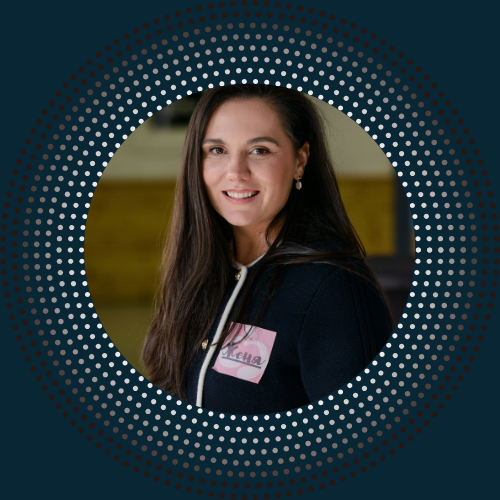
Meet the Speaker
Zhenya Dimitrova
Co-founder of Momfident, a mobile app making psychological support accessible to every mother. A social entrepreneur with 8+ years of experience and a former Sales and Marketing Director in international education, Zhenya combines science, technology, and business to address real social challenges — including leading the first large-scale psychological study among young mothers in Bulgaria.
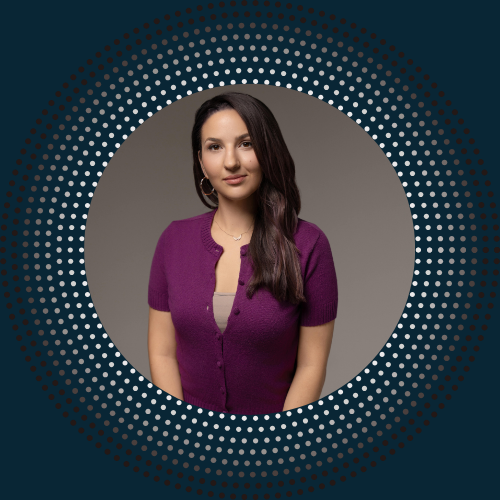
Meet the Speaker
Teodora Ivanova
Co-founder and CMO of Skillsome, where she applies marketing as a tool for behavior change to close the gap between what schools teach and what real life demands. Trained in Stuttgart in Advertising & Marketing Communications, Teodora’s “scenic route” through customer service, project management, business coaching, and event management gives her a rare 360° view of customer psychology, execution, and human growth.
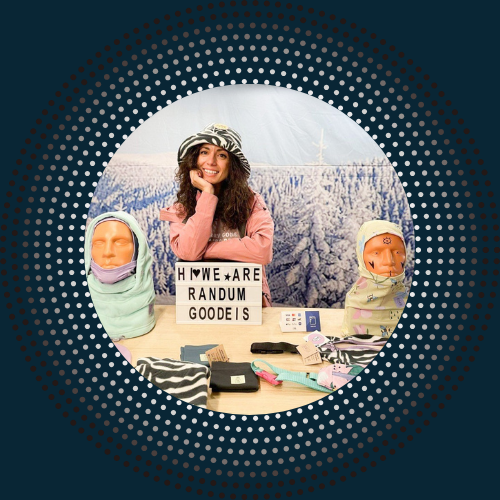
Meet the Speaker
Fatima Megraby
Founder of Randum Goodies, a woman-owned Bulgarian brand creating high-quality, functional gear made for adventure, winter sports, and everyday movement. A long-standing member of our community, Fatima brings the perspective of building a product brand from scratch — design, supply, storytelling, and all.
Panel Discussion Transcript
Lazarina (host): [00:00:00] panel number two is about starting a business with lessons learned. , And I originally titled it Lessons from the Trenches, because that’s how it feels sometimes whenever you are running a business or starting a business. Zhenya is the co-founder of Momfidence. That’s a mobile app making psychological support accessible to every mother. She is a social entrepreneur with more than eight years of experience, , and she is also a former woman in marketing as a sales and marketing director.
She combines science, technology, and business to address real social challenges. They’re also very famous for doing the first psychological study on mothers, which ran last year, if I remember correctly. Her fun fact is that she grew up with snakes around her since she w- she was a little baby. So ask her about that in the networking break.
Then we have, , Teodora Ivanova. She is the co-founder and CMO of [00:01:00] SkillSome, where she applies marketing as a tool for behavior change to close the gap between what schools teach and what real life demands. She is trained in Stuttgart in advertising and marketing communications, and she is, , yeah, working through customer service, project management, business coaching, event management, and that gives her a really unique mix to do what she’s doing.
Her fun fact is she is a former triathlon athlete. She also, very funnily, why the running club has come up as a reoccurring theme today, she is an organizer of triathlon events, and she is also in very near proximity…
I’m just adding fun facts about her because I was blown away. But she’s in very near proximity to a coach, , for triathlon athletes. Then finally, , Fatima, she is the founder of Round of Goodies.
, You have all been introduced to Round of Goodies, but, , they don’t just make swag. They don’t just do business conference [00:02:00] stuff. I would say that’s probably the most boring part of what you do. They do, , apparel for, , women who Are sporty, that are into adventurous sports like snowboarding and surfing and all these, , amazing like winter sports, summertime and all of that.
, So they make it always high quality, functional, , and it’s also with a consideration of your everyday movement as well. Your, your fun fact is, it is actually really fun. , She has had a pet squirrel in her lifetime.
I’m very glad my pet squirrel didn’t meet you. I have so many questions, and I’m sure I’m going to ask publicly some of them because I know you have too many questions as well. And so one of my questions immediately was just like, “Was it like an indoors one?” And she was like, “Yeah.” “Did it go outside?” “No, just indoors.”
“What was the name? How did you care of [00:03:00] it?” Blah, blah, blah. So yeah. It, , it’s… If you want, we can make the panel about squirrels. I’m sure we’ll all be happy. Okay. So, let’s start. So please, , tell us a little bit about, what did you do before entrepreneurship, before starting your business, and how has that experience shaped you? And I would say, what was the biggest challenge that you were not equipped for, , from your previous role, from your previous marketing life whenever you entered the life of entrepreneurship?
Fatima Megraby: Okay. So hi, everyone. I’ve heard my name called many times today, so not gonna reintroduce myself. But, , I would just say that I’ve been– I’m happy and have been privileged that for the past, let’s say, something close to 12, 15 years, I have been able to mix and make an intersection in between my– some of my favorite things, which are marketing, snowboarding, traveling, and [00:04:00] colors.
So while I currently run my own business, like six, seven years old, I think, , I’ve actually had previous venues of entrepreneurship in the past because I also actually used to run a community along with my friends for sports events for women. And we grew it just organically just for the sake of having a community to do sports with, and then we started doing events, so I started traveling.
But I monetized the community by traveling with it to some great parts of the world. So this was, this, this was like my first attempt at having like my own business, which was actually tourism. So much fun. You get to travel with friends and make money out of it. And then, , I had my product marketing, , career at a software company, and then IBM bought our business.
I guess we did pretty well with marketing, so they bought it. , And now I’ve been on my own for three years running my little business. My main challenge is that [00:05:00] seems like I like more stuff, so I’m not as focused as many of you here are. , But the main challenge is just really not always having the right people in the room to discuss your priorities with and your ideas with, because coming out of a corporate environment where you have lots of peers to communicate with, you have…
You– In most cases, you have your own manager who actually tells you what your to-do is for the week or what your priorities are. Whereas when you work by– on your own, it’s really is up to you to manage, to come up with the ideas, to come up with the product, to come up with campaign, to execute it, and to set the priorities.
So long story long, I think I was on very fast and really fast.
Zhenya Dimitrova: Okay, as you all understood, I’m the snake lady. , So I have, , 13 years of marketing and sales, , companies. [00:06:00] So my last corporate role was marketing and sales director, but I, I never defined myself with the role. I’ve always knew that I have this entrepreneurship spirit to create things, , create products.
, When I was in the corporate, create like new services, , new teams, et cetera. And for the last 10 years, actually, I’ve also been building, , my own, , companies, startups. , And the latest one, , Momfident, actually, it’s a mixture of entrepreneurial business experience and personal milestones because obviously the idea was born when I became a mom myself.
, And I was facing with, , obviously with the joy and the happiness, but also all the challenges. , And through… And, and at that point, I literally turned my personal kind of pain, challenges into my [00:07:00] biggest passion, , because, , I was just wondering, is it just me, you know, who’s struggling? I started, you know, doing deep interviews with other moms, then with the coaches, and then gradually I kind of built my tribe with other co-founders, with partners, and, , coming up with Momfident.
And to your question, what’s the challenge? Well, it’s, , with all the joy, with all the, , , freedom and creativity like running a business gives you, it also gives you all the uncertainty, , all the, you know, jumping from the security into the unknown, which can be quite thrilling and exciting, but also scary at times because obviously when you’re at a company, you have the safety net of, you know, the organization being behind you and all the teams, et cetera.
And when you do this on your own and you are accountable for yourself, for your team, it’s a big responsibility. [00:08:00] So it’s quite a psychological thing to get used to it. Thank you.
Teodora Ivanova: Hello to the ones I haven’t had chance to talk to yet. So for me, my path started very in the classic way. So going to Germany to study marketing and advertising and actually, , what I mean with classic way is pursue corporate, , corporate role and getting it at the end.
, What I wanted to add to my, , studies is that it was a very, very broad, , way of structuring this particular, program where I was at. So, , it was everything from management through the classical marketing and making the ad spots through pla- , through, through the billboards, through PR, through event management, project management, everything.
So it was huge, huge path. So I was like, okay, project management and event [00:09:00] management feel good to me, and this is eventually where I went into later on. But first I went through customer, through customer experience, customer management, in Stocke. Maybe the mothers here know this brand. Then I went through the corporate world at Bosch, where today, Rita, literally, I felt everything what you said about having the feeling of flying and being the rock star, , in the professional life, and then being super miserable in the personal life because I was getting up, not even getting up from my bed because it was corona, where I had my highest achievements as a project manager in corporate.
I was not even getting out of my bed. I was opening my laptop, working, working, closing my laptop, sleeping, miserable. Yeah, yeah. But very successful, hey. So that was [00:10:00] project management. At that time, I realized, well, every project works only when the people in it are really working together. So I started looking into psychology and to change management, then, leaned into coaching and business consulting.
But parallelly, I was always looking into, something on the side, something to play with. And, of course, I was playing very, very smart, having products from Bulgaria, selling them in, in Bulgaria, in Germany. That didn’t work. I failed. Then, having, the… Probably you all know about, , the pyramid, the pyramid marketing k- type of, , businesses.
This is also something that I went through with traveling, one of the passions, so on and so forth. And what I was not prepared for when we started Skillsum with my partners was wearing this many hats at once, because it’s not only project [00:11:00] management or only event management. It is having the decisions, all, all of them, and then, , also giving myself the permission to really wear them with pride and making the decisions, not only making the The design on Canva, but also thinking about the long-term strategy.
And this is also, also a challenge where I have to say this is something still in the works, but you need the expert. Yeah. I think it’s very important to try.
Lazarina (host): Of course, there is a massive challenge with partnering with experts whenever you’re a business that’s just starting with very limited budget.
So, something to, to think about. I am cautious of time, so I do want to say, , we have four questions and, I would love to hear your experience about all of them. , The first one is, how do you, … And I would love to hear the, the honest, raw [00:12:00] answer. It might not be, you know, the space now considering the time, but, summarizing your experience, what do you think is the quickest way to build trust and credibility when you’re just starting out your business?
What would you tap into if you had to pick one thing?
Fatima Megraby: We talked about, or the ladies before us talked about building community, and tapped into it a lot, and it is the same. Building business is building community. I mean, you can’t do business without community. So it is the, really the authentic way of going towards the audience, and meeting their needs.
So first of all, you need to know their needs and then really being authentic in the way you can help them
Zhenya Dimitrova: I think I, kind of added this question, but now [00:13:00] listening to it, I will really, as you requested, go into a sincere answer. I think, building credibility and trust is when you really intentionally want to create value and want to create something good for this community we are speaking. And I will, I will share a story here what we, we, we did at Mamfident.
So as it was presented, this is designed for moms to give psychological support in a moment when, you know, mental health is kind of stigmatized and maternal mental health even more. And we realized that, yeah, there is global research, but there is no data in Bulgaria. And in that moment, I also realized that, yes, we want to contribute to that, but we are too small, like we are a small team.
And I started building this community or ecosystem, so to say, of all the possible [00:14:00] partners that care about this topic, like hospitals, birthing pediatric hospitals, NGOs, different parenting groups, medias, companies, everyone. Around 30 partners we made. And we did the first national survey on maternal mental health, which aim was not just to, you know, show how moms are feeling.
We know that, we can be happy, joyful, tired, and et cetera. But also show the impact on the family and impact on society. Like, for example, we put this hypothesis, how is this affecting the decision of having more children? And it appeared that, okay, I need to clarify that here, that this was not, overall representative study, like most of the women who do part work, highly educated in the bigger cities.
But guess which was the first reason they put when changing their mind for another child? This was finding motherhood hard, where, [00:15:00] you know, in the political and economic sphere, we will hear that it’s the financials and, you know, they would come up with such incentives, but, like, it’s hardly spoken about this aspect.
So we wanted to raise awareness, not just among women, among mothers, but among family, society, that this is an important, a very important thing. And I think this is how we built credibility and trust because we not only showed the intention, but we did realize it
Fatima Megraby: I can just say plus one for the sake of No, I, I, I’ll short. I don’t know. I, I think that it’s really just about being authentic. If you are passionate about something, it will, like, it, it will attract you like-minded the right people. Like, with my brands, I haven’t, I haven’t done amazing marketing or I haven’t been to, like, I [00:16:00] haven’t planned just like in my corporate job where we had 120 people and we called Forester and Gardener and everything was like top-notch.
With my brands, I just trust, trust my guts. I put all of my power into it, and then eventually I end up with the right people in the room. And all of my clients, like the, the wo- wonderful women and men who support us as a brand are fantastic. They are exactly the sort of people I imagined in the room, and I didn’t do the persona thing and all of it.
Just put all of you into it, and eventually, one way or another, you will, , you will get these results.
Lazarina (host): That’s a really good conversation to be had, obviously not on this stage. I’m very sorry. I can’t do like two-hour panels. I really want to. I really want to. But a very interesting conversation to be had about when do personas become useful?
Because I’ve certainly seen situations where they are useful at an [00:17:00] enterprise level. Me, as a business owner, I also don’t have all of that stuff. I have the massive to-do list like Rita mentioned, that’s stressing me out and keeping me up at night, just constantly reminding me how bad of a business owner I am.
But then I kind of go with the gut in terms of what am I building next? Okay, what seems more relevant? What are we doing this year and so on. There is the vision, there is the, the mantra, both in the community and in my business. But I kind of feel that it will come at a later stage when there is someone to communicate it to who is our persona.
Because right now it’s, it sits in your head when you’re… it’s just you. But then later on when it becomes important to communicate it to someone else, then I, I feel like that’s when it, happens. , Like I said, I’m very conscious of time.
I’m very split between two questions. So can you please raise your hand if you would like to talk about something more personal or something more practical related to [00:18:00] building a business? So let’s do the personal raise of hands Okay. And the practical ones. We are completely split. Thank you.
The practical side, let’s start with that. Where are you at in your scaling journey, and what do you think is the, the thing that you need to take you to the next step?
Fatima Megraby: I’m having a hard time to scale. It is really about being able to create the right systems in order to be confident enough to actually attract capital and make sure that you can actually create living for other people with your business as well, and also manage someone else’s money or your hard-earned money with it.
So for me, it’s really about building the s- the systems so that you can actually delegate to other people, involve more people and more capital into it. But it’s not an easy topic. I mean, I understand the logics behind it, but it’s just not easy to get there from my experience. [00:19:00] All right.
Lazarina (host): I just want to very quickly add h- making your first hire.
What a day, what a day where you pay someone to do work for you, regardless whether it’s freelance or full-time. I- I’m not at the stage where I’m hiring full-time people. I think that’s coming soon, but it– what a day that’s going to be. I’m not gonna sleep for a month probably. I don’t know how else, how other people do it.
Please catch me on the party later and tell me how you sleep, ’cause I wouldn’t… I don’t know. I wouldn’t be capable.
Zhenya Dimitrova: I think when, we are speaking about the early, early moments of entrepreneurship, we kind of need to be quite creative. And that’s why I’ve always been strategizing on some growth hacks or, you know, hubs or… And also very big lessons I took from my first startup where I was living with this, misconception that I can do it all, [00:20:00] that I’m limitless until I reached, as some of you shared here, burnout, depression, and I was also with a, with a small baby at the time.
I realized something very important, that I need people, I need partners. So that’s why this time I took it very differently from before and finding, really creating this network. Like I, I mentioned the case with the, with the study, but that’s what we apply as our strategy, like, for example, making partnerships with institutions, with private businesses, with, media, also internationally.
Obviously, at some point it’s also a matter of, getting cap- capital and resources to scale, but until then, you just be creative and make the most of it, of all the connections that you have and all these places where you build [00:21:00] credibility, you know, obviously through them reach your audience there
Teodora Ivanova: Well, scaling is something you do when you have– only when you have the right system in place. And as Vyara said today, it is important to keep the vision in mind, but you, some– you sh-should not marry your, your ideas, right? So this is exactly where we are with Skillsome. We just pivoted very hard four months, four months ago because we started in the beginning with the idea of reaching– of building a huge platform for parents and children and then, launching it, do all these things with social media.
And we developed to a point where we were like, okay, and now we need an investment. And here we [00:22:00] are waiting for an investment, of course, proactively looking for it. But at some point, after two or three months in really searching, we were like, okay, we are not in this… We will not stay in this mode. We are, we are really playing the victims that, it’s the only thing we need, just the money of someone.
No. Actually, we have resources that we can still use and tap into as founders, as team. So we turned around, made this pivot where we are like, okay, what about the schools? What about the teachers, the educators? And it’s amazing. Yes- yesterday we had the meeting at an international school in Germany, which will start implementing our program from next year on, which is amazing.
Thank you. I, I’m so happy about that. But this is also now what we are doing while talking to them is thinking about [00:23:00] scaling when we do that. Okay. So when we are doing that with them from September, how we are going to give them the product, how much are we going to change it for each and every school, and how much we are staying in a frame so that we can scale.
Lazarina (host): Now, I’m very excited for this question.
I’m glad you’re split. I kind of was hoping that it would… I’m going to rephrase the question based on what it was in the preparation docs, because that’s what I’ve been thinking about for myself, and I want to ask you to close your eyes and think about that moment, whether it has happened or not. Let us know if you feel comfortable about it.
What is the moment where you know, “I have made it with this business”? And what does that look like in terms of circumstances for the business and for you? I’ll give a little bit of context of why this [00:24:00] question. There are a lot of people building things that are completely amazing with the whole authenticity and integrity that you need in order to build something beautiful, and they are still building them with the intention to exit them at some point.
There’s nothing wrong with that. You can still build something beautiful and know that your path is going to end with this product or company. I personally fall into this camp, and I don’t believe that you should be completely tied with the companies that you create for forever, you know, for eternity.
But I also know people that, envision this moment like I have made it into something different. So I will share mine if you, allow me the space, because for me, I feel like, , two different points for this community. Like I mentioned earlier, it will be something where it can stand on its own.
If I say, “I’m going away to [00:25:00] Australia for a year,” no one in the community is gonna be like, “Hey, where’s Lazarina, by the way? Like, she hasn’t been showing up.” Like, that’s my goal. So it’s a, a completely self-sustained space where everyone helps facilitate events, helps facilitate conversations and so on.
We kind of did a test run when I was on maternity leave. If you know, you know how that went. , And so with my business, however, I want to build something so amazing that people are fighting to have it. So it’s a completely different mindset, but it’s still the same authenticity I bring to it. And it’s interesting how that has shaped my approach.
So I’m very sorry for taking the time, but I do want to see what yours are going to look like, because I’m sure they’re going to be very different, and I would like to hear your perspective on why that moment and why for this company.
Do I need to repeat the question? No one wants to share. It’s okay if you don’t want to share as [00:26:00] well. It’s very a personal thing, I would say.
Teodora Ivanova: I was looking if someone wants to take the mic already, but then, when you first asked the question, I thought this is a moment in the past, but then when you shared, I realized it’s a moment where you would say it in the future.
I will share both because I think I already had such a moment. It’s probably not we’ve made it, but at that moment it felt so real and so close to it. Just two months ago when I was actually at the school in front of the third graders talking about marketing, what marketing is, and what is the target audience, and how to actually make a poster for their booths that they will have in market week.
When they were laughing and active and just fully immersed in this experience that we had as a lesson, this is when I felt, “Okay, this is [00:27:00] Skillsome. This is what I want to experience, that kids are really enjoying learning.” When, what I think about the future moment is
A society of people who really have those essential life skills to thrive in the real world. This is our mission, and this is, this is very powerful. So to have this society of people being emotionally intelligence having the social skills that they need every day for for the situations, the digital literacy, the financial literacy, and everything helps them in the world, , besides academics, of course
Zhenya Dimitrova: I think entrepreneurship is a never-ending story, and there is always, you know, many steps we want to overcome and achieve the next. And, from day one, I knew that I’m starting [00:28:00] something huge and that I need to enjoy every milestone. So we hit a very important milestone this year, which is, as I mentioned, of these partners, turning some of these partners into first clients.
And for me, it was a big milestone that some of these clients were the hardest industries to get into, like hospitals and also one bank that is about to become our client, including Confident as a social benefit, and we’re creating the whole program around supporting women returning back to the workforce.
Obviously, in the long term for me, and this is the ambition we are chasing after obviously having more resources and more case studies now that we will… We, we are already in this path, is doing clinical trials and having evidence because the whole project is built on evidence, research, et cetera, how we are helping it.
For the time [00:29:00] being, I’m relieved from the feedback I receive, but once it’s clinically proved, this will open many doors to not only working with the private sector, but also with the public, because my end goal is that this is incor-incorporated into the public healthcare, and this reaches the most vulnerable women when or if they need it.
Fatima Megraby: Everyone is so strategic and focused where I, I, I measure the– I just, I, I never feel like I made it because I haven’t. Or, or the times where I felt where I really just feel it, like in places that like we do pop-ups and just the amounts of girls that come up and like how amazing they are and how friendly and all that is really when I, whenever I feel like, “Wow, these people in the room with us, like they’re so nice and so pretty and so kind,” and all that.
And on a very personal level, I’m [00:30:00] just gonna sh- I’m gonna be very brief. So my biggest dream in life has been to buy my own home. Long-standing dream. And winter, December of twenty twenty-four, twenty twenty-three, I don’t remember, my last employer tells us that they will be restructuring because IBM bought us.
The next day, I c- I’m, I go into a place that is being sold, and it is my dream place. So I knew, I know at this point that I’m gonna be sacked from work. And then, like one year later, I realized that I stand in my own home because I have created myself a safety net because of work, because of taking chances.
Like entrepreneurship is always like sometimes you’re very happy, then you’re super low. But it is really an exciting thing to do it for yourself, and I don’t think I made it. But just being able to be my [00:31:00] own safety net and to build up to my own personal KPIs because as I said, I’m not a workaholic. I very much value my freedom.
It is. I create like our garments, they are for free people as well. I know that this is why they resonate with us. So yeah. And I very much admire that you are so forward-looking and so strategic. I’m just being myself.
Lazarina (host): Massive, massive round of applause, please.
Thank you so much for being, first of all, so vulnerable. , I certainly think that having both perspectives is important, and I completely would second you on the fact that I can relate to what you said because motherhood for me has been possible because I built the foundation to be able to take that time.
Otherwise, it literally would not have been possible. So yes, do it and [00:32:00] go start your business. That’s the point of this panel. So I hope you’re all feeling very inspired, and thank you once again for sharing your stories with us and being vulnerable about your future and what that looks like.Lazarina (host): [00:00:00] panel number two is about starting a business with lessons learned. , And I originally titled it Lessons from the Trenches, because that’s how it feels sometimes whenever you are running a business or starting a business. Zhenya is the co-founder of Momfidence. That’s a mobile app making psychological support accessible to every mother. She is a social entrepreneur with more than eight years of experience, , and she is also a former woman in marketing as a sales and marketing director.
She combines science, technology, and business to address real social challenges. They’re also very famous for doing the first psychological study on mothers, which ran last year, if I remember correctly. Her fun fact is that she grew up with snakes around her since she w- she was a little baby. So ask her about that in the networking break.
Then we have, , Teodora Ivanova. She is the co-founder and CMO of [00:01:00] SkillSome, where she applies marketing as a tool for behavior change to close the gap between what schools teach and what real life demands. She is trained in Stuttgart in advertising and marketing communications, and she is, , yeah, working through customer service, project management, business coaching, event management, and that gives her a really unique mix to do what she’s doing.
Her fun fact is she is a former triathlon athlete. She also, very funnily, why the running club has come up as a reoccurring theme today, she is an organizer of triathlon events, and she is also in very near proximity…
I’m just adding fun facts about her because I was blown away. But she’s in very near proximity to a coach, , for triathlon athletes. Then finally, , Fatima, she is the founder of Round of Goodies.
, You have all been introduced to Round of Goodies, but, , they don’t just make swag. They don’t just do business conference [00:02:00] stuff. I would say that’s probably the most boring part of what you do. They do, , apparel for, , women who Are sporty, that are into adventurous sports like snowboarding and surfing and all these, , amazing like winter sports, summertime and all of that.
, So they make it always high quality, functional, , and it’s also with a consideration of your everyday movement as well. Your, your fun fact is, it is actually really fun. , She has had a pet squirrel in her lifetime.
I’m very glad my pet squirrel didn’t meet you. I have so many questions, and I’m sure I’m going to ask publicly some of them because I know you have too many questions as well. And so one of my questions immediately was just like, “Was it like an indoors one?” And she was like, “Yeah.” “Did it go outside?” “No, just indoors.”
“What was the name? How did you care of [00:03:00] it?” Blah, blah, blah. So yeah. It, , it’s… If you want, we can make the panel about squirrels. I’m sure we’ll all be happy. Okay. So, let’s start. So please, , tell us a little bit about, what did you do before entrepreneurship, before starting your business, and how has that experience shaped you? And I would say, what was the biggest challenge that you were not equipped for, , from your previous role, from your previous marketing life whenever you entered the life of entrepreneurship?
Fatima Megraby: Okay. So hi, everyone. I’ve heard my name called many times today, so not gonna reintroduce myself. But, , I would just say that I’ve been– I’m happy and have been privileged that for the past, let’s say, something close to 12, 15 years, I have been able to mix and make an intersection in between my– some of my favorite things, which are marketing, snowboarding, traveling, and [00:04:00] colors.
So while I currently run my own business, like six, seven years old, I think, , I’ve actually had previous venues of entrepreneurship in the past because I also actually used to run a community along with my friends for sports events for women. And we grew it just organically just for the sake of having a community to do sports with, and then we started doing events, so I started traveling.
But I monetized the community by traveling with it to some great parts of the world. So this was, this, this was like my first attempt at having like my own business, which was actually tourism. So much fun. You get to travel with friends and make money out of it. And then, , I had my product marketing, , career at a software company, and then IBM bought our business.
I guess we did pretty well with marketing, so they bought it. , And now I’ve been on my own for three years running my little business. My main challenge is that [00:05:00] seems like I like more stuff, so I’m not as focused as many of you here are. , But the main challenge is just really not always having the right people in the room to discuss your priorities with and your ideas with, because coming out of a corporate environment where you have lots of peers to communicate with, you have…
You– In most cases, you have your own manager who actually tells you what your to-do is for the week or what your priorities are. Whereas when you work by– on your own, it’s really is up to you to manage, to come up with the ideas, to come up with the product, to come up with campaign, to execute it, and to set the priorities.
So long story long, I think I was on very fast and really fast.
Zhenya Dimitrova: Okay, as you all understood, I’m the snake lady. , So I have, , 13 years of marketing and sales, , companies. [00:06:00] So my last corporate role was marketing and sales director, but I, I never defined myself with the role. I’ve always knew that I have this entrepreneurship spirit to create things, , create products.
, When I was in the corporate, create like new services, , new teams, et cetera. And for the last 10 years, actually, I’ve also been building, , my own, , companies, startups. , And the latest one, , Momfident, actually, it’s a mixture of entrepreneurial business experience and personal milestones because obviously the idea was born when I became a mom myself.
, And I was facing with, , obviously with the joy and the happiness, but also all the challenges. , And through… And, and at that point, I literally turned my personal kind of pain, challenges into my [00:07:00] biggest passion, , because, , I was just wondering, is it just me, you know, who’s struggling? I started, you know, doing deep interviews with other moms, then with the coaches, and then gradually I kind of built my tribe with other co-founders, with partners, and, , coming up with Momfident.
And to your question, what’s the challenge? Well, it’s, , with all the joy, with all the, , , freedom and creativity like running a business gives you, it also gives you all the uncertainty, , all the, you know, jumping from the security into the unknown, which can be quite thrilling and exciting, but also scary at times because obviously when you’re at a company, you have the safety net of, you know, the organization being behind you and all the teams, et cetera.
And when you do this on your own and you are accountable for yourself, for your team, it’s a big responsibility. [00:08:00] So it’s quite a psychological thing to get used to it. Thank you.
Teodora Ivanova: Hello to the ones I haven’t had chance to talk to yet. So for me, my path started very in the classic way. So going to Germany to study marketing and advertising and actually, , what I mean with classic way is pursue corporate, , corporate role and getting it at the end.
, What I wanted to add to my, , studies is that it was a very, very broad, , way of structuring this particular, program where I was at. So, , it was everything from management through the classical marketing and making the ad spots through pla- , through, through the billboards, through PR, through event management, project management, everything.
So it was huge, huge path. So I was like, okay, project management and event [00:09:00] management feel good to me, and this is eventually where I went into later on. But first I went through customer, through customer experience, customer management, in Stocke. Maybe the mothers here know this brand. Then I went through the corporate world at Bosch, where today, Rita, literally, I felt everything what you said about having the feeling of flying and being the rock star, , in the professional life, and then being super miserable in the personal life because I was getting up, not even getting up from my bed because it was corona, where I had my highest achievements as a project manager in corporate.
I was not even getting out of my bed. I was opening my laptop, working, working, closing my laptop, sleeping, miserable. Yeah, yeah. But very successful, hey. So that was [00:10:00] project management. At that time, I realized, well, every project works only when the people in it are really working together. So I started looking into psychology and to change management, then, leaned into coaching and business consulting.
But parallelly, I was always looking into, something on the side, something to play with. And, of course, I was playing very, very smart, having products from Bulgaria, selling them in, in Bulgaria, in Germany. That didn’t work. I failed. Then, having, the… Probably you all know about, , the pyramid, the pyramid marketing k- type of, , businesses.
This is also something that I went through with traveling, one of the passions, so on and so forth. And what I was not prepared for when we started Skillsum with my partners was wearing this many hats at once, because it’s not only project [00:11:00] management or only event management. It is having the decisions, all, all of them, and then, , also giving myself the permission to really wear them with pride and making the decisions, not only making the The design on Canva, but also thinking about the long-term strategy.
And this is also, also a challenge where I have to say this is something still in the works, but you need the expert. Yeah. I think it’s very important to try.
Lazarina (host): Of course, there is a massive challenge with partnering with experts whenever you’re a business that’s just starting with very limited budget.
So, something to, to think about. I am cautious of time, so I do want to say, , we have four questions and, I would love to hear your experience about all of them. , The first one is, how do you, … And I would love to hear the, the honest, raw [00:12:00] answer. It might not be, you know, the space now considering the time, but, summarizing your experience, what do you think is the quickest way to build trust and credibility when you’re just starting out your business?
What would you tap into if you had to pick one thing?
Fatima Megraby: We talked about, or the ladies before us talked about building community, and tapped into it a lot, and it is the same. Building business is building community. I mean, you can’t do business without community. So it is the, really the authentic way of going towards the audience, and meeting their needs.
So first of all, you need to know their needs and then really being authentic in the way you can help them
Zhenya Dimitrova: I think I, kind of added this question, but now [00:13:00] listening to it, I will really, as you requested, go into a sincere answer. I think, building credibility and trust is when you really intentionally want to create value and want to create something good for this community we are speaking. And I will, I will share a story here what we, we, we did at Mamfident.
So as it was presented, this is designed for moms to give psychological support in a moment when, you know, mental health is kind of stigmatized and maternal mental health even more. And we realized that, yeah, there is global research, but there is no data in Bulgaria. And in that moment, I also realized that, yes, we want to contribute to that, but we are too small, like we are a small team.
And I started building this community or ecosystem, so to say, of all the possible [00:14:00] partners that care about this topic, like hospitals, birthing pediatric hospitals, NGOs, different parenting groups, medias, companies, everyone. Around 30 partners we made. And we did the first national survey on maternal mental health, which aim was not just to, you know, show how moms are feeling.
We know that, we can be happy, joyful, tired, and et cetera. But also show the impact on the family and impact on society. Like, for example, we put this hypothesis, how is this affecting the decision of having more children? And it appeared that, okay, I need to clarify that here, that this was not, overall representative study, like most of the women who do part work, highly educated in the bigger cities.
But guess which was the first reason they put when changing their mind for another child? This was finding motherhood hard, where, [00:15:00] you know, in the political and economic sphere, we will hear that it’s the financials and, you know, they would come up with such incentives, but, like, it’s hardly spoken about this aspect.
So we wanted to raise awareness, not just among women, among mothers, but among family, society, that this is an important, a very important thing. And I think this is how we built credibility and trust because we not only showed the intention, but we did realize it
Fatima Megraby: I can just say plus one for the sake of No, I, I, I’ll short. I don’t know. I, I think that it’s really just about being authentic. If you are passionate about something, it will, like, it, it will attract you like-minded the right people. Like, with my brands, I haven’t, I haven’t done amazing marketing or I haven’t been to, like, I [00:16:00] haven’t planned just like in my corporate job where we had 120 people and we called Forester and Gardener and everything was like top-notch.
With my brands, I just trust, trust my guts. I put all of my power into it, and then eventually I end up with the right people in the room. And all of my clients, like the, the wo- wonderful women and men who support us as a brand are fantastic. They are exactly the sort of people I imagined in the room, and I didn’t do the persona thing and all of it.
Just put all of you into it, and eventually, one way or another, you will, , you will get these results.
Lazarina (host): That’s a really good conversation to be had, obviously not on this stage. I’m very sorry. I can’t do like two-hour panels. I really want to. I really want to. But a very interesting conversation to be had about when do personas become useful?
Because I’ve certainly seen situations where they are useful at an [00:17:00] enterprise level. Me, as a business owner, I also don’t have all of that stuff. I have the massive to-do list like Rita mentioned, that’s stressing me out and keeping me up at night, just constantly reminding me how bad of a business owner I am.
But then I kind of go with the gut in terms of what am I building next? Okay, what seems more relevant? What are we doing this year and so on. There is the vision, there is the, the mantra, both in the community and in my business. But I kind of feel that it will come at a later stage when there is someone to communicate it to who is our persona.
Because right now it’s, it sits in your head when you’re… it’s just you. But then later on when it becomes important to communicate it to someone else, then I, I feel like that’s when it, happens. , Like I said, I’m very conscious of time.
I’m very split between two questions. So can you please raise your hand if you would like to talk about something more personal or something more practical related to [00:18:00] building a business? So let’s do the personal raise of hands Okay. And the practical ones. We are completely split. Thank you.
The practical side, let’s start with that. Where are you at in your scaling journey, and what do you think is the, the thing that you need to take you to the next step?
Fatima Megraby: I’m having a hard time to scale. It is really about being able to create the right systems in order to be confident enough to actually attract capital and make sure that you can actually create living for other people with your business as well, and also manage someone else’s money or your hard-earned money with it.
So for me, it’s really about building the s- the systems so that you can actually delegate to other people, involve more people and more capital into it. But it’s not an easy topic. I mean, I understand the logics behind it, but it’s just not easy to get there from my experience. [00:19:00] All right.
Lazarina (host): I just want to very quickly add h- making your first hire.
What a day, what a day where you pay someone to do work for you, regardless whether it’s freelance or full-time. I- I’m not at the stage where I’m hiring full-time people. I think that’s coming soon, but it– what a day that’s going to be. I’m not gonna sleep for a month probably. I don’t know how else, how other people do it.
Please catch me on the party later and tell me how you sleep, ’cause I wouldn’t… I don’t know. I wouldn’t be capable.
Zhenya Dimitrova: I think when, we are speaking about the early, early moments of entrepreneurship, we kind of need to be quite creative. And that’s why I’ve always been strategizing on some growth hacks or, you know, hubs or… And also very big lessons I took from my first startup where I was living with this, misconception that I can do it all, [00:20:00] that I’m limitless until I reached, as some of you shared here, burnout, depression, and I was also with a, with a small baby at the time.
I realized something very important, that I need people, I need partners. So that’s why this time I took it very differently from before and finding, really creating this network. Like I, I mentioned the case with the, with the study, but that’s what we apply as our strategy, like, for example, making partnerships with institutions, with private businesses, with, media, also internationally.
Obviously, at some point it’s also a matter of, getting cap- capital and resources to scale, but until then, you just be creative and make the most of it, of all the connections that you have and all these places where you build [00:21:00] credibility, you know, obviously through them reach your audience there
Teodora Ivanova: Well, scaling is something you do when you have– only when you have the right system in place. And as Vyara said today, it is important to keep the vision in mind, but you, some– you sh-should not marry your, your ideas, right? So this is exactly where we are with Skillsome. We just pivoted very hard four months, four months ago because we started in the beginning with the idea of reaching– of building a huge platform for parents and children and then, launching it, do all these things with social media.
And we developed to a point where we were like, okay, and now we need an investment. And here we [00:22:00] are waiting for an investment, of course, proactively looking for it. But at some point, after two or three months in really searching, we were like, okay, we are not in this… We will not stay in this mode. We are, we are really playing the victims that, it’s the only thing we need, just the money of someone.
No. Actually, we have resources that we can still use and tap into as founders, as team. So we turned around, made this pivot where we are like, okay, what about the schools? What about the teachers, the educators? And it’s amazing. Yes- yesterday we had the meeting at an international school in Germany, which will start implementing our program from next year on, which is amazing.
Thank you. I, I’m so happy about that. But this is also now what we are doing while talking to them is thinking about [00:23:00] scaling when we do that. Okay. So when we are doing that with them from September, how we are going to give them the product, how much are we going to change it for each and every school, and how much we are staying in a frame so that we can scale.
Lazarina (host): Now, I’m very excited for this question.
I’m glad you’re split. I kind of was hoping that it would… I’m going to rephrase the question based on what it was in the preparation docs, because that’s what I’ve been thinking about for myself, and I want to ask you to close your eyes and think about that moment, whether it has happened or not. Let us know if you feel comfortable about it.
What is the moment where you know, “I have made it with this business”? And what does that look like in terms of circumstances for the business and for you? I’ll give a little bit of context of why this [00:24:00] question. There are a lot of people building things that are completely amazing with the whole authenticity and integrity that you need in order to build something beautiful, and they are still building them with the intention to exit them at some point.
There’s nothing wrong with that. You can still build something beautiful and know that your path is going to end with this product or company. I personally fall into this camp, and I don’t believe that you should be completely tied with the companies that you create for forever, you know, for eternity.
But I also know people that, envision this moment like I have made it into something different. So I will share mine if you, allow me the space, because for me, I feel like, , two different points for this community. Like I mentioned earlier, it will be something where it can stand on its own.
If I say, “I’m going away to [00:25:00] Australia for a year,” no one in the community is gonna be like, “Hey, where’s Lazarina, by the way? Like, she hasn’t been showing up.” Like, that’s my goal. So it’s a, a completely self-sustained space where everyone helps facilitate events, helps facilitate conversations and so on.
We kind of did a test run when I was on maternity leave. If you know, you know how that went. , And so with my business, however, I want to build something so amazing that people are fighting to have it. So it’s a completely different mindset, but it’s still the same authenticity I bring to it. And it’s interesting how that has shaped my approach.
So I’m very sorry for taking the time, but I do want to see what yours are going to look like, because I’m sure they’re going to be very different, and I would like to hear your perspective on why that moment and why for this company.
Do I need to repeat the question? No one wants to share. It’s okay if you don’t want to share as [00:26:00] well. It’s very a personal thing, I would say.
Teodora Ivanova: I was looking if someone wants to take the mic already, but then, when you first asked the question, I thought this is a moment in the past, but then when you shared, I realized it’s a moment where you would say it in the future.
I will share both because I think I already had such a moment. It’s probably not we’ve made it, but at that moment it felt so real and so close to it. Just two months ago when I was actually at the school in front of the third graders talking about marketing, what marketing is, and what is the target audience, and how to actually make a poster for their booths that they will have in market week.
When they were laughing and active and just fully immersed in this experience that we had as a lesson, this is when I felt, “Okay, this is [00:27:00] Skillsome. This is what I want to experience, that kids are really enjoying learning.” When, what I think about the future moment is
A society of people who really have those essential life skills to thrive in the real world. This is our mission, and this is, this is very powerful. So to have this society of people being emotionally intelligence having the social skills that they need every day for for the situations, the digital literacy, the financial literacy, and everything helps them in the world, , besides academics, of course
Zhenya Dimitrova: I think entrepreneurship is a never-ending story, and there is always, you know, many steps we want to overcome and achieve the next. And, from day one, I knew that I’m starting [00:28:00] something huge and that I need to enjoy every milestone. So we hit a very important milestone this year, which is, as I mentioned, of these partners, turning some of these partners into first clients.
And for me, it was a big milestone that some of these clients were the hardest industries to get into, like hospitals and also one bank that is about to become our client, including Confident as a social benefit, and we’re creating the whole program around supporting women returning back to the workforce.
Obviously, in the long term for me, and this is the ambition we are chasing after obviously having more resources and more case studies now that we will… We, we are already in this path, is doing clinical trials and having evidence because the whole project is built on evidence, research, et cetera, how we are helping it.
For the time [00:29:00] being, I’m relieved from the feedback I receive, but once it’s clinically proved, this will open many doors to not only working with the private sector, but also with the public, because my end goal is that this is incor-incorporated into the public healthcare, and this reaches the most vulnerable women when or if they need it.
Fatima Megraby: Everyone is so strategic and focused where I, I, I measure the– I just, I, I never feel like I made it because I haven’t. Or, or the times where I felt where I really just feel it, like in places that like we do pop-ups and just the amounts of girls that come up and like how amazing they are and how friendly and all that is really when I, whenever I feel like, “Wow, these people in the room with us, like they’re so nice and so pretty and so kind,” and all that.
And on a very personal level, I’m [00:30:00] just gonna sh- I’m gonna be very brief. So my biggest dream in life has been to buy my own home. Long-standing dream. And winter, December of twenty twenty-four, twenty twenty-three, I don’t remember, my last employer tells us that they will be restructuring because IBM bought us.
The next day, I c- I’m, I go into a place that is being sold, and it is my dream place. So I knew, I know at this point that I’m gonna be sacked from work. And then, like one year later, I realized that I stand in my own home because I have created myself a safety net because of work, because of taking chances.
Like entrepreneurship is always like sometimes you’re very happy, then you’re super low. But it is really an exciting thing to do it for yourself, and I don’t think I made it. But just being able to be my [00:31:00] own safety net and to build up to my own personal KPIs because as I said, I’m not a workaholic. I very much value my freedom.
It is. I create like our garments, they are for free people as well. I know that this is why they resonate with us. So yeah. And I very much admire that you are so forward-looking and so strategic. I’m just being myself.
Lazarina (host): Massive, massive round of applause, please.
Thank you so much for being, first of all, so vulnerable. , I certainly think that having both perspectives is important, and I completely would second you on the fact that I can relate to what you said because motherhood for me has been possible because I built the foundation to be able to take that time.
Otherwise, it literally would not have been possible. So yes, do it and [00:32:00] go start your business. That’s the point of this panel. So I hope you’re all feeling very inspired, and thank you once again for sharing your stories with us and being vulnerable about your future and what that looks like.
 English (UK)
 Български